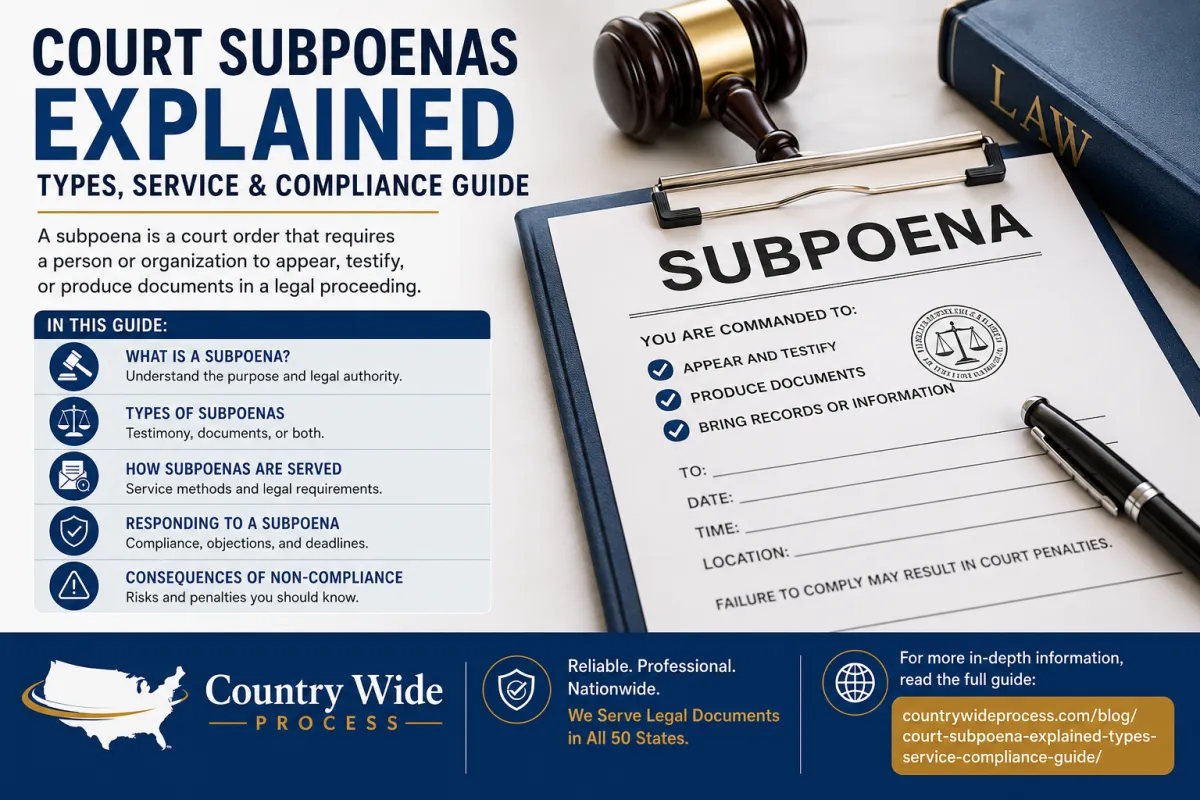
Court Subpoenas Explained: What They Are, Why They Matter, and How to Respond
Whether you're an attorney preparing for litigation, a business receiving legal documents, or an individual involved in a court case, understanding court subpoenas is essential. A subpoena is more than just a legal notice—it is a court-authorized order that requires action. Ignoring it or responding incorrectly can lead to delays, financial penalties, or other legal consequences.
This guide explains what court subpoenas are, the different types you may encounter, how they are typically served, and what recipients should know when responding. For readers seeking a deeper dive into service requirements and legal procedures, we've also included a helpful resource from Country Wide Process at the end.
What Is a Court Subpoena?
A court subpoena is a legal document that requires a person, organization, or business to take a specific action related to a legal proceeding. Depending on the circumstances, a subpoena may require someone to:
Appear in court to testify
Attend a deposition
Produce documents or records
Provide electronically stored information (ESI)
Allow inspection of property in certain cases
Unlike a simple request, a subpoena carries legal authority. Failing to comply without a valid legal objection may result in court enforcement.
Why Courts Issue Subpoenas
Subpoenas play a critical role in ensuring that relevant evidence and testimony are available during legal proceedings. They help courts establish the facts by requiring individuals or organizations to provide information that may be important to resolving a dispute.
Common situations where subpoenas are used include:
Civil lawsuits
Business disputes
Employment litigation
Personal injury claims
Family law matters
Criminal proceedings
Government investigations
Common Types of Court Subpoenas
Although terminology varies by jurisdiction, most subpoenas fall into a few primary categories.
Subpoena for Testimony
This type requires an individual to appear at a designated time and location to provide testimony. The appearance could be in court or during a deposition conducted before trial.
Subpoena for Documents
Often called a subpoena duces tecum in many jurisdictions, this requires the recipient to produce specified documents, records, emails, contracts, financial information, or other relevant evidence.
Businesses frequently receive these subpoenas during commercial litigation.
Combined Subpoena
Some subpoenas require both testimony and document production. The recipient may need to appear while also bringing requested records.
Who Can Receive a Subpoena?
A subpoena is not limited to parties involved in a lawsuit.
Recipients may include:
Witnesses
Businesses
Financial institutions
Medical providers
Employers
Government agencies
Third-party record custodians
Experts and consultants
In many cases, the recipient is simply someone who possesses relevant information.
How Are Court Subpoenas Served?
Every jurisdiction has specific rules regarding service of process.
Generally, service may involve:
Personal delivery
Service through an authorized process server
Service by a sheriff or marshal
Alternative methods permitted by court order
Service on a registered agent for businesses
Proper service is important because courts typically require proof that the subpoena reached the intended recipient according to applicable rules.
What Happens After Receiving a Subpoena?
Receiving a subpoena does not necessarily mean someone has done anything wrong.
Instead, recipients should:
Carefully read every page.
Note all deadlines.
Preserve potentially relevant documents.
Avoid destroying or altering evidence.
Contact an attorney if legal questions arise.
Determine whether objections or motions are appropriate.
Prompt attention helps avoid unnecessary complications.
Can You Object to a Subpoena?
Yes.
Depending on the jurisdiction and circumstances, recipients may have legal grounds to object or request that a subpoena be modified.
Possible reasons include:
Requests that are overly broad
Undue burden
Privileged communications
Confidential information
Improper service
Insufficient time to comply
Because objection procedures vary significantly by state and federal rules, legal advice is often recommended.
Consequences of Ignoring a Subpoena
Simply disregarding a subpoena is generally not advisable.
Potential consequences may include:
Court orders compelling compliance
Monetary sanctions
Contempt proceedings
Additional legal expenses
Delays in litigation
Courts typically expect recipients either to comply or to raise timely legal objections through proper procedures.
Best Practices for Businesses
Organizations receive subpoenas regularly, particularly in commercial litigation.
Businesses should consider:
Creating document retention policies
Training staff on legal document handling
Routing subpoenas immediately to legal counsel
Preserving electronic records
Working with experienced legal support professionals
Having clear internal procedures can reduce compliance risks.
The Importance of Proper Service
One overlooked aspect of subpoenas is ensuring they are served correctly.
Incorrect service may:
Delay court proceedings
Require re-service
Increase litigation costs
Lead to disputes over enforceability
This is why many attorneys rely on professional process serving companies with experience handling court documents across multiple jurisdictions.
Final Thoughts
Court subpoenas are an important part of the legal system, helping ensure that courts have access to the testimony and evidence needed to resolve disputes fairly. Whether you're an individual, business, or legal professional, understanding the basics of subpoenas can help you respond appropriately and avoid unnecessary legal issues.
While the general principles are similar across jurisdictions, the specific rules governing subpoena issuance, service, deadlines, and compliance can vary by state and by court.
If you're looking for a more comprehensive explanation of subpoena types, service requirements, compliance procedures, and best practices, read the detailed guide from Country Wide Process:
👉 https://countrywideprocess.com/blog/court-subpoena-explained-types-service-compliance-guide/
It provides an in-depth overview for attorneys, law firms, businesses, and anyone involved in the legal process.
